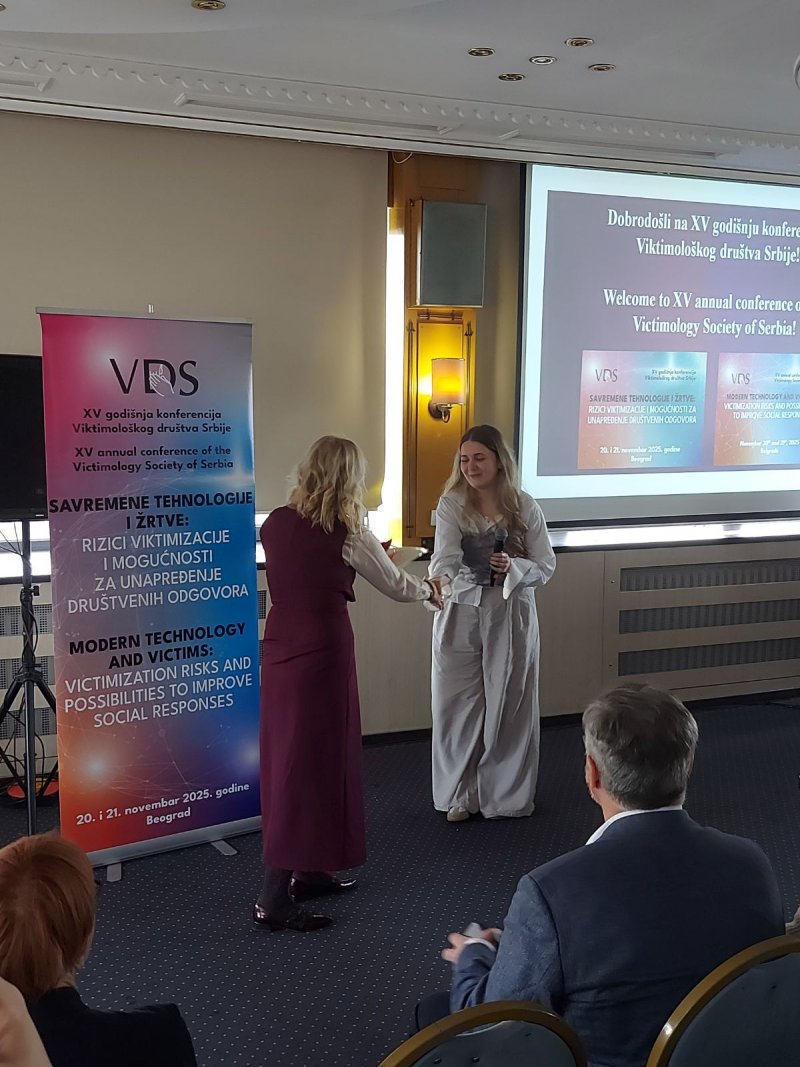
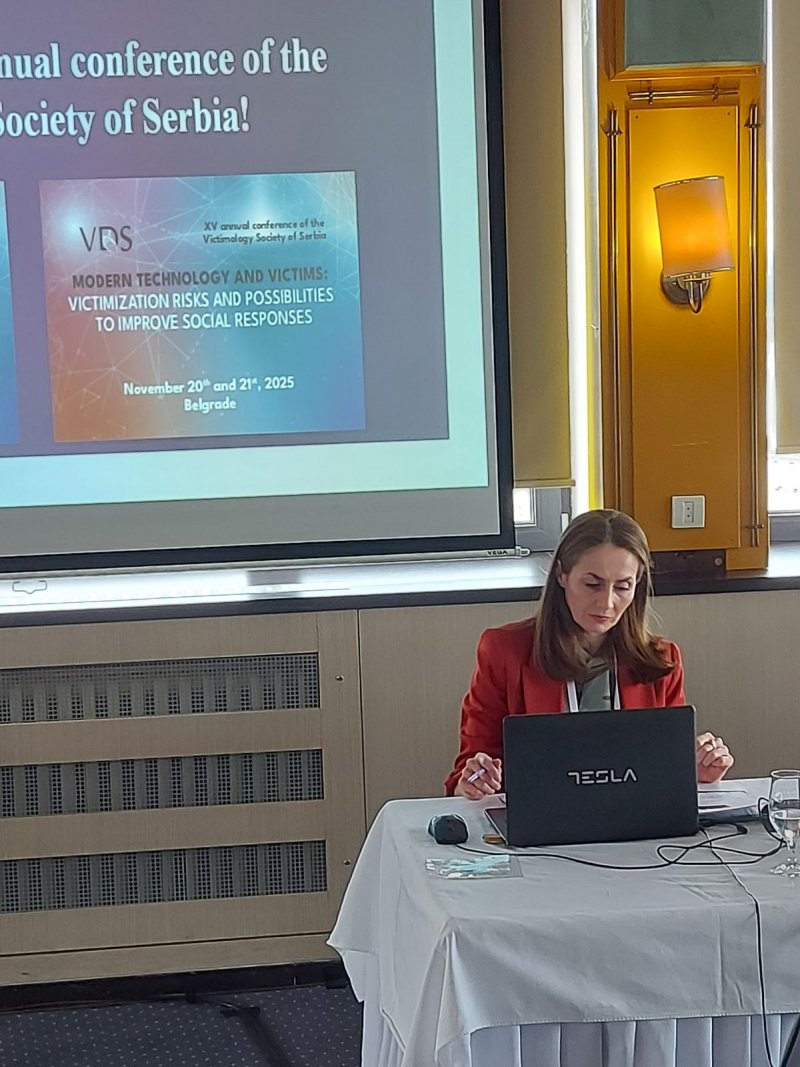
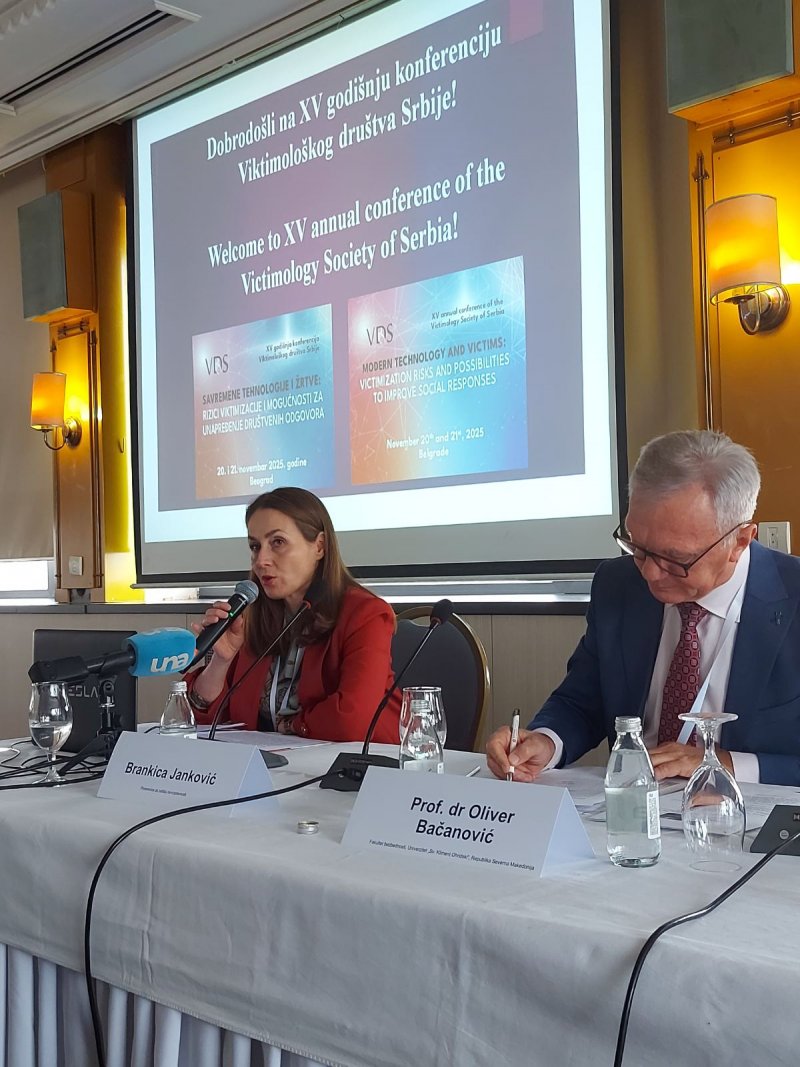
The Commissioner for the Protection of Equality, Brankica Janković, spoke at the opening of the 15th annual conference of the Victimology Society of Serbia, titled “Modern Technologies and Victims: Risks of Victimization and Opportunities for Improving Social Responses.”
Violence carried out through technology is becoming a tool of discrimination and control, particularly directed toward women, girls, and other social groups at increased risk of discrimination, Janković said, noting that according to data from the Economist Intelligence Unit, between 16 and 58 percent of women worldwide have experienced some form of online violence.
The Commissioner emphasized that the fight against digital violence is not a matter of technology, but a matter of justice, equality, and human dignity. In a time when the digital space is just as important as the physical one, it is essential that we jointly develop new protection mechanisms. Addressing digital violence requires not only improvements to the legal framework but also a more active institutional response, better prevention, and comprehensive support for victims. This is why cooperation among all actors is necessary: state institutions, educational establishments, media, civil society, and technology companies. Only together can we build a digital space that is a place of freedom rather than fear, Janković stressed.
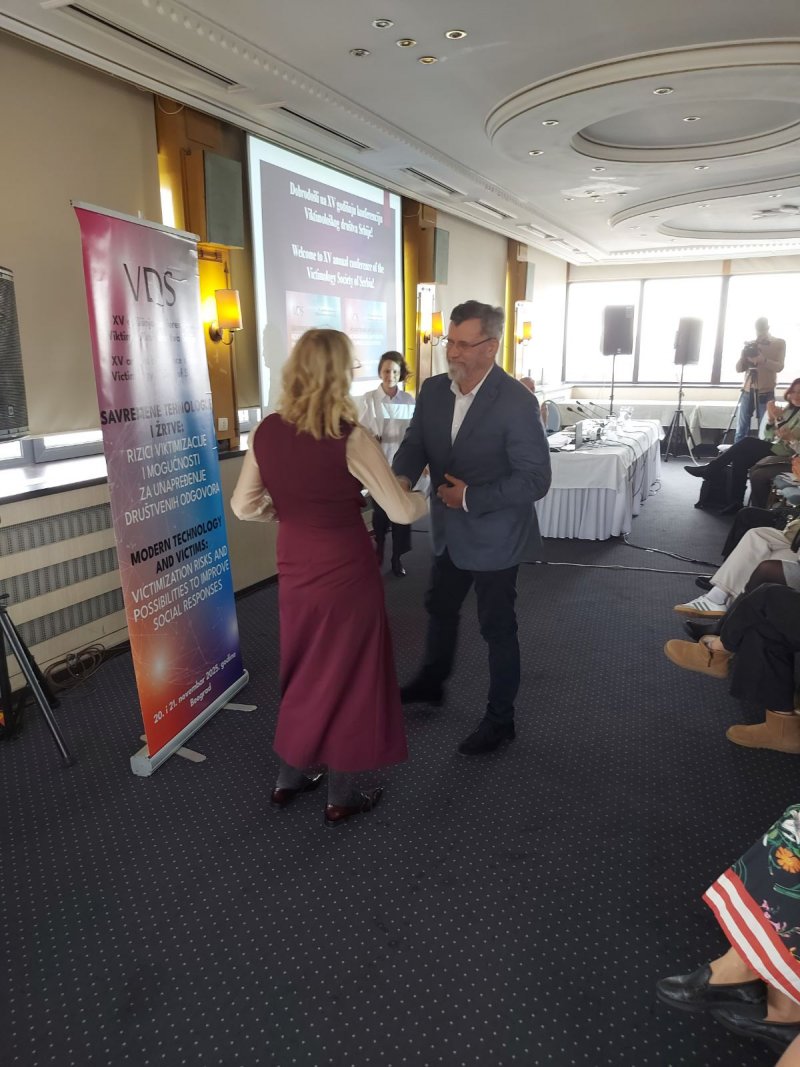
The opening session also featured Professor Dr. Oliver Bačanović from the Faculty of Security at the “St. Clement of Ohrid” University in North Macedonia, and Jasmina Nikolić, Director of the Victimology Society of Serbia. After the introductory remarks, the Victimology Society of Serbia presented its 2025 awards: to Veran Matić for contributions to improving victims’ rights, to Svetlana Jovanović and Mirna Yousfi as talented young researchers, and to the organization Haver Serbia for the “third path.” The two-day international conference brought together experts, researchers, activists, and practitioners from various fields to discuss key challenges and opportunities that modern technologies present in the context of victimization and victim protection.